Skincare routines follow a defined application sequence where molecular weight, pH compatibility, and ingredient interaction influence product placement. GHK-Cu copper peptide Canada research-grade material is frequently studied in layered application protocols, where the copper tripeptide is positioned after water-based toning steps and before occlusive or emollient-heavy formulas. Heavy molecules can be absorbed without interfering with the stratum corneum. Most structured protocols account for this by introducing short intervals between steps when applying fibroblast-targeted compounds like GHK-Cu. Studies examining transdermal peptide behaviour indicate that surface saturation from prior product layers can reduce effective peptide availability, which is why sequence order in multi-step routines carries documented relevance in cosmetic formulation research.
Compatibility with active ingredients
Not all active ingredients coexist without altering each other’s behaviour at the skin surface. GHK-Cu has been examined alongside several commonly used actives, and findings suggest that acidic compounds applied immediately before copper peptides may interfere with the tripeptide’s copper coordination stability.
- Low pH exfoliants applied directly before GHK-Cu can disrupt copper ion binding within the peptide complex.
- Vitamin C in ascorbic acid form may compete with copper coordination when both are layered without interval separation.
- Niacinamide applied after GHK-Cu in the routine sequence shows no documented interference in current formulation studies.
- Retinoid compounds are typically applied at separate routine intervals rather than in direct sequence with copper peptides.
Formulators studying multi-step compatibility generally recommend separating GHK-Cu from highly acidic steps by either time intervals or product buffering layers to preserve peptide integrity throughout the routine.
Sequential absorption behaviour
Skin absorption in layered routines is not additive in a simple linear sense. Each product layer alters the surface environment for the next, affecting hydration levels, surface lipid distribution, and receptor site availability. GHK-Cu applied within a hydrated skin environment, following a humectant-based step, has shown comparatively more consistent absorption behaviour in controlled settings than application onto dry or compromised barrier surfaces.
Peptide diffusion studies further indicate that molecular interaction with existing hyaluronic acid films on the skin surface may support GHK-Cu residence time at the epidermal level. This points to a sequence logic where humectant application preceding copper peptide steps is structurally sound from an absorption standpoint.
Formulation type considerations
The format in which GHK-Cu is delivered within a routine also affects its behaviour across product layers. Serum-based delivery, due to lower viscosity and higher water content, allows faster surface spreading and earlier contact with upper dermal layers compared to cream-based formats applied at the same routine stage.
- Serum formats containing GHK-Cu show faster initial surface contact due to reduced occlusive content.
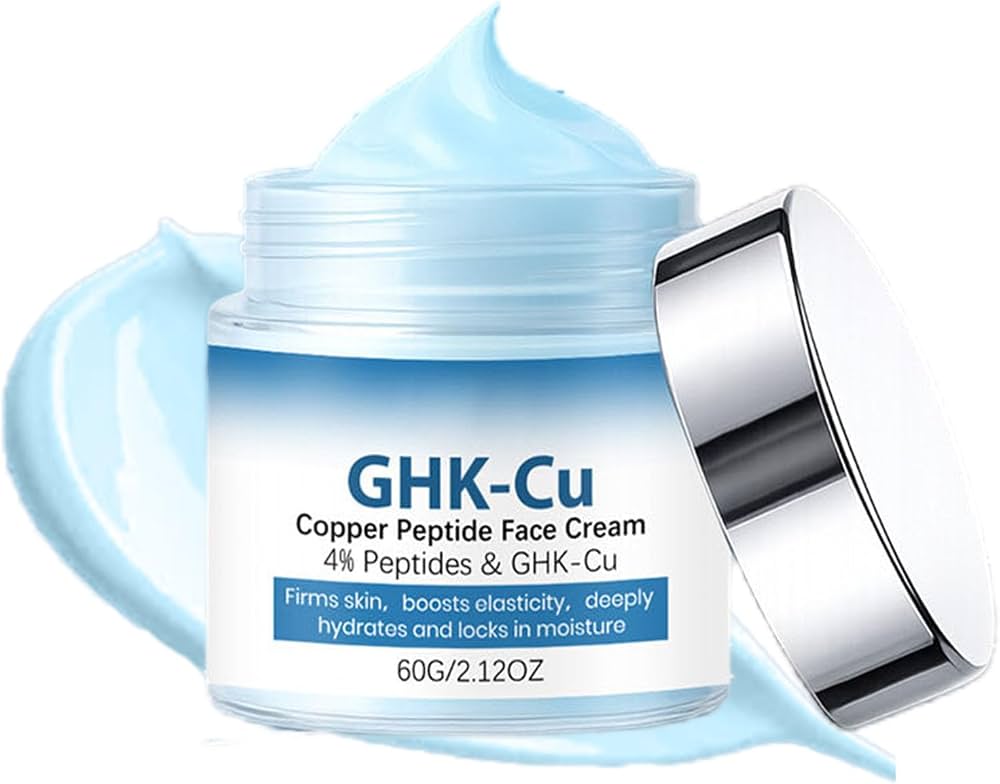
- Cream-based copper peptide formulas are better positioned as final or near-final routine steps given their occlusive nature.
- Essence and toner formats containing GHK-Cu allow early-stage delivery but may require follow-up with barrier-supporting layers.
Routine construction around GHK-Cu ultimately depends on the delivery format chosen, the actives present in the surrounding steps, and the skin barrier condition at the time of application. Research into copper peptide behaviour within layered systems continues to inform how formulators and clinical researchers structure multi-step protocols for dermal study purposes.